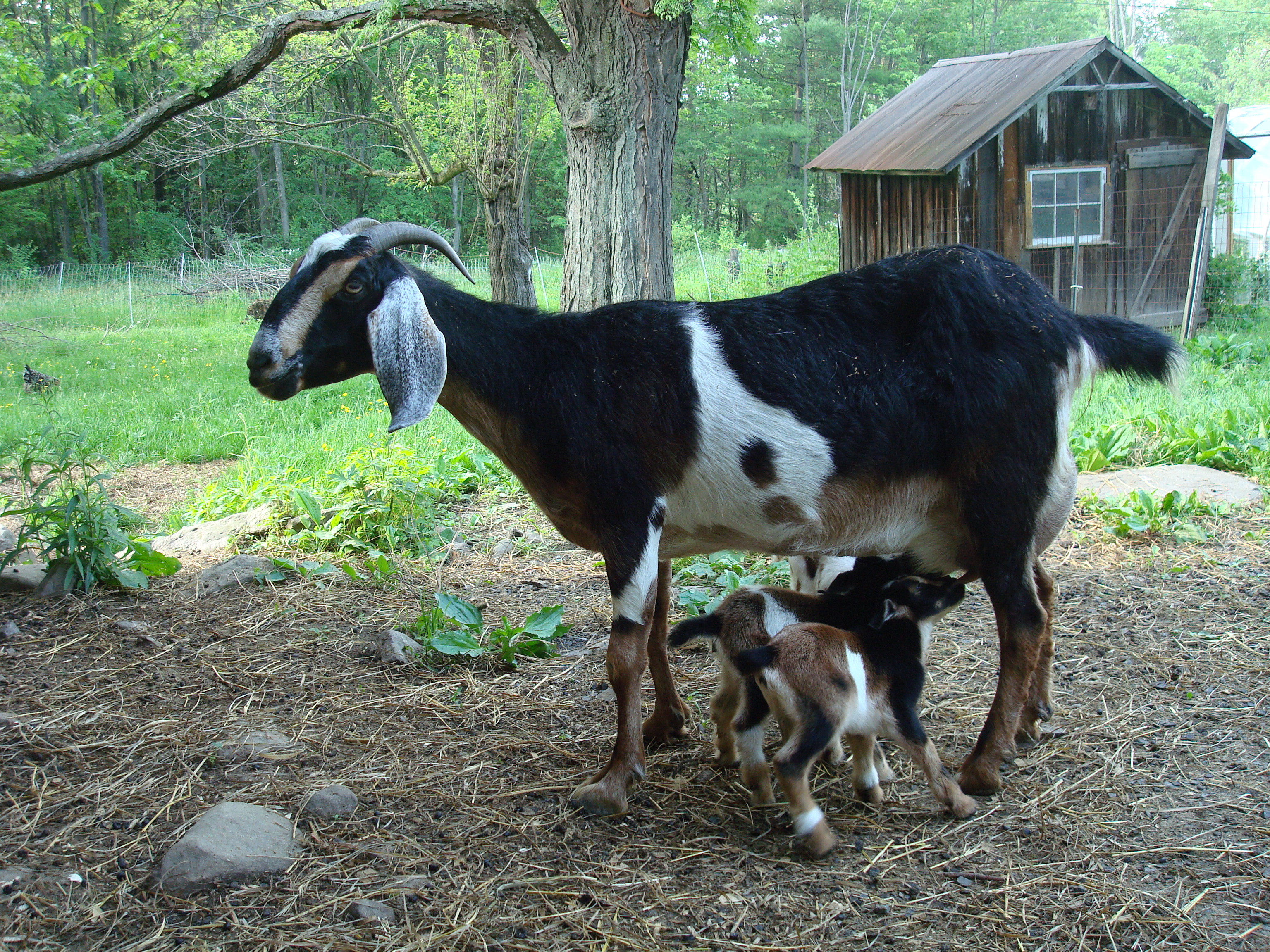
 Many of my clients are farmers. Most of them have lifelong experience with livestock. All of them laughed at me during my first spring as a goat midwife. I had attended hundreds of clients’ births and had found my stride as my community’s midwife, but I had no experience with animal birthing and had two pregnant goats due any minute. To make matters worse, I owned a stack of books that made kidding sound horrifying and fraught with potential complications, requiring a bin of supplies that would eclipse the average birth kit. My clients’ husbands would chuckle at my questions, answer them simply and kindly, and then look at me askance. I’d struggle to maintain credibility: “It’s the hooves, I don’t know what to do about hooves!” Ultimately, I decided to put away the books, put down the anxiety, and wait.
When Rose began showing signs of labor on a Sunday morning early in April, I was already cleaning out the barn. Knowing that she’d probably prefer privacy and certainly not want the dreaded wheelbarrow attending, I packed up my tools and scooted out the gate. For the next five minutes she stood at the gate yelling toward the house, I could only assume for me. Towels and iodine in tow, I returned to witness a lovely barn birth.
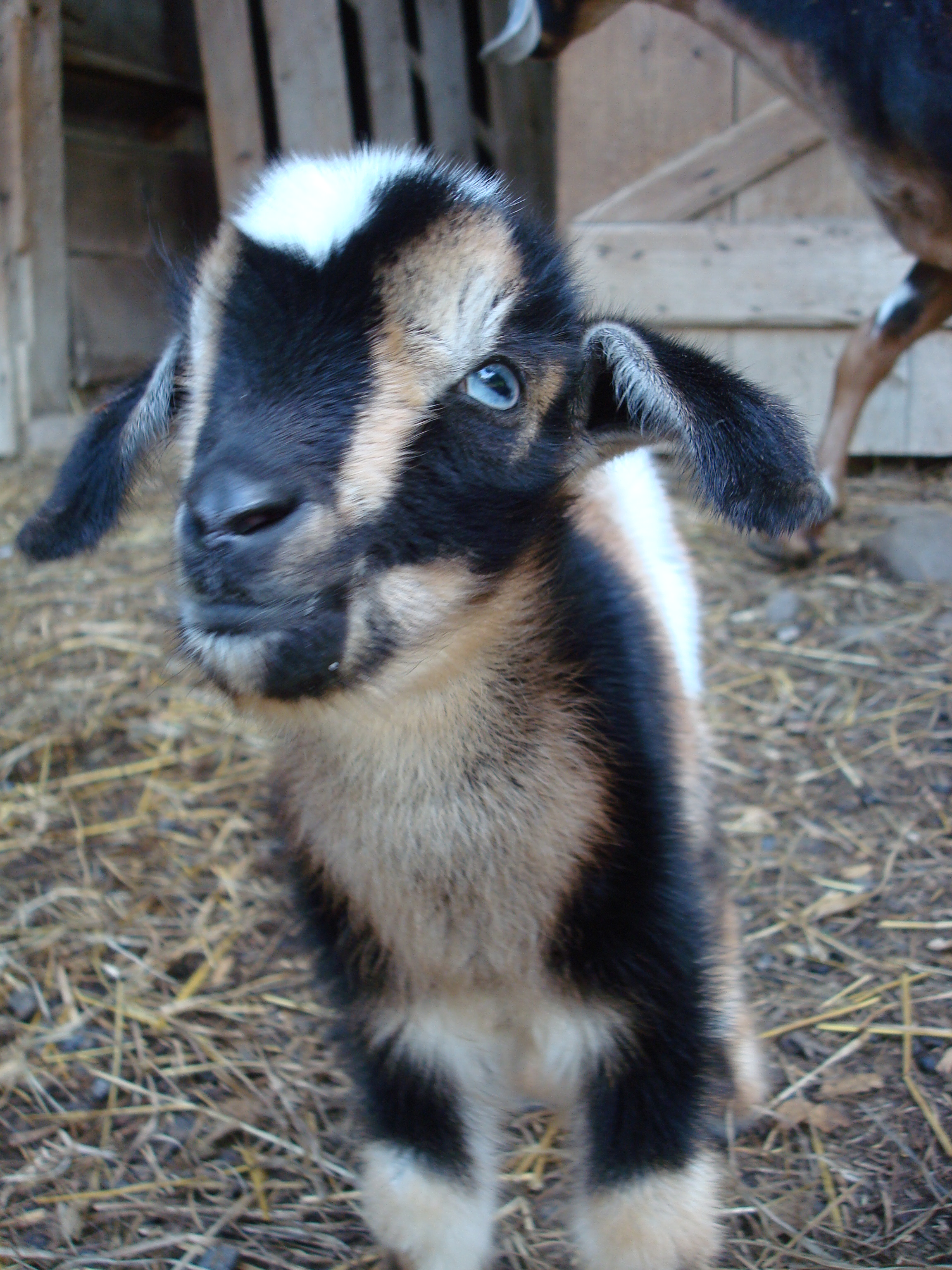
Rose paced. She circled. She moaned. I sang to her every song I could remember and when I’d run out of song, she would come over and nudge me with her nose, as if prodding me to continue. After an hour or so I started again at the first song and began to wonder, I admit, what was next. In a lady’s labor, there are often distinct signs of… shift, and my Rosie’s labor was no different. She made a little grunting noise once, twice, and lay down on a soft pile of hay. There was no question when she started pushing and in just one or two pushes I saw the glistening smoothness of a water bag peeking out, with a little nose and two white hooves behind it. I grabbed a towel and watched as a tiny black and brown creature slid, still in the bag, onto the hay. If you’ve never seen an animal birth, you can watch one or just imagine an alien pod hatching.
 One thing I’d read that resonated was that it’s important not to interfere, but to let the mother break the sac, lick the baby, and bond. Of course. With that deep sense of knowing that all midwives bring to the miracle that is a new motherbaby bonding, I sat on my hands. And watched Rose start in confused horror and immediately try to kill her squirming new baby with her horns. Really. I tell this story and people say “Maybe you didn’t give her enough time.” These are the same people who say to let dogs “Fight it out.” They’ve never seen it.
Now Rose is *special*. My friend Wendy, her first human, nursed her through a fever as a kid that we agreed might have had some lasting effects. Also, she was bottle fed, not mother raised. This, it seems, makes a goat less likely to take to motherhood. Or she thought it looked like an alien pod, too. I don’t know. Whatever the reason it was clear that I needed to intervene. I gathered the adorable little slimeball in my lap and toweled it off. When I tried to show Rose the towel, she let out a bleat and began pushing again. I set the now really adorable baby girl out of harm’s way as a second set of hooves and nose was born, followed by a second kid. Again, the confused attempted homicide. Again the rescue. Both girl kids were up and wobbling, making bleating noises that would melt a mother’s heart, if she wasn’t *special*.
Molasses water, though, will soften any goat, special or no. I gave Rosie a long drink to reward her for her efforts and distract her as I got the little babies latched on. Just like people babies. Those wee things knew exactly what to do right away and I took a breath for the first time in twenty minutes watching their bellies fill with colostrum.
I named the girls Iris and Flora. For three days, Rose would allow me to tether her and would allow the babies to nurse, but pulled no punches if one of her two firstborn got far enough away from her udder to give her a good look at it. For three days, I tethered and fed her, getting the babies latched on and then separating them from Rose when they were full. Finally, something clicked. Four days after their birth, Rose decided to keep her babies and keep them alive, and never looked back. The babies weighed just over four pounds at birth and seemed to almost double in size each day. There is no joy like watching new baby goats scamper and play, and in the end their rocky start didn’t seem to affect them.

Okay, Flora is a little bad

 The Village LadySmith